Once Alex and I had delivered our pitch to our secondary audience about our ideas for our coursework production, I came to a conclusion that is was necessary for us both to do some detailed research into our audience and really start to understand the importance of understanding how different audiences interpret the information they see in any media text. We received helpful comments from them that we needed to develop our storyline more to grab their interest in our short film but also change some aspects of the storyboard and animatic we showed to them shortly after we pitched our idea to them. This SlideShare shows in particular some research I made about popular Audience theories and explaining the importances of knowing our audience.
Thursday, 6 October 2016

Monday, 3 October 2016
How To Storyboard | Short Film
Looking back at our old storyboard and animatic, I realised that the ideas we were trying to convey to our audiences didn't really show within the storyboard. The rushed drawings, the unfamiliar sequences, the lack of additional sound effects and the lack of detailed notes all made it very difficult for Alex and I to be prepared with what camera shots we were going to use before we arrived on set.
To help me develop my skills in storyboarding, I decided to research a tutorial to find out how to storyboard for any media production. I found this tutorial of YouTube by RocketJump Film School which introduces the methods of storyboarding.
By the end of watching this video, I learnt the essentials I needed to know when creating our new refinement storyboard including the following:
To help me develop my skills in storyboarding, I decided to research a tutorial to find out how to storyboard for any media production. I found this tutorial of YouTube by RocketJump Film School which introduces the methods of storyboarding.
By the end of watching this video, I learnt the essentials I needed to know when creating our new refinement storyboard including the following:
- There aren't any strict, exacting rules on how to do storyboards - conveying information is what's important.
- Storyboards are a technical document, a tool. So it doesn't matter if you a skilled illustrator or not. (As long as Alex and I understand how to frame each shot we capture then that is all that matters.)
- Depending on the media production, consider the size of the panels you wish to use for your storyboard. In this case, a widescreen panel is needed for our storyboard since our coursework production is a short film.
- Drawing arrows can help determine movement in a shot. Use them to show if a character or object is moving.
- Storyboards are typically drawn with the help of a script, although in some cases they can act as your script if you find it helpful to visualise your ideas first before writing the screenplay.
- Depending on the resources you have, you can even use photos from the locations you wish to shoot and even pre visual recordings of your ideas to see whether these will work on set.
Having completed my research on the basic concepts of making a storyboard, Alex and I are going to sit down and begin redrawing our ideas for this short film.
Saturday, 1 October 2016
Illustrating New Ideas
Following up from the previous post about the improvements we needed to make, Alex and I talked our ideas for developing the story of our short film further in depth. During our conversation, he stated that in order for our short film to stand out from the rest, the camera angles and sequences editing needs to be well thought through and meaningful to our storyline.
This photograph below shows the sketches he made illustrating some of the ideas he was thinking we could implement.

Besides the fact that we need to re-work our storyboard in detail and develop our storyline even further, he wanted to state a point to me the importance of us planning our camera shots in advance before we are on set filming.
This photograph below shows the sketches he made illustrating some of the ideas he was thinking we could implement.

Besides the fact that we need to re-work our storyboard in detail and develop our storyline even further, he wanted to state a point to me the importance of us planning our camera shots in advance before we are on set filming.
Friday, 30 September 2016
Looking at Feature Films
After creating a first draft storyboard and animatic, the advice we got from our audience was to firstly improve the quality of the storyboard as well as improve the animatic to help understand our ideas for this short film better and secondly, to develop the storyline of our short film more by maybe researching into more film examples which we could borrow ideas from. In addition to looking at several British and American short films to give Alex and I some inspiration when we come to plan our short film narrative, I decided to research some popular Action/Adventure films which could help Alex and I draw up some more ideas for our short film.
The first iconic Action/Adventure spy film franchise of all time I looked at was James Bond, more specifically "Skyfall". The obvious reasons for choosing this film were to borrow ideas from is its classic British ideology of a fearless spy and someone who is willing to put their life on the front line to help defend his country. When a mission to kill a fierce assassin goes wrong for James Bond, a hard drive is stolen which contains the names and whereabouts of several agents from MI6. THis forces M to relocate the agency underground and her position challenged by Garreth Mallory, the new head of Intelligence and Security Comittee. Whilst MI6 comes under attack, 007 must track down and destroy the threat, no matter how personal the cost.
Overall, my thoughts for Skyfall and the James Bond series in general have really impressed me and other fans of Action/Adventure genre films. The film franchise is an iconic portrayal of British Action films and is now expanding its audiences across the whole world. The smart suits, glorious cars, props and landscapes which are shot in this film are typical conventions of a spy film which Alex and I would like to incorporate into our short film.
Another worldwide popular franchise is the Harry Potter series. Since Alex and I want our short film to be following the conventions of a typical British film with a mixture of American stylised shots and action sequences, we would also hope to incorporate some more fanstastical themes and ideas into our short film as this will broaden our audiences viewing. In this trailer for Harry Potter and The Deathly Hallows: Part 2, Harry, Ron and Hermione continue to find the rest of Voldemort's Hprecruxes, until Harry discovers that on is at Hogwarts, they flee there as soon as possible but Voldemort instantly finds out about their mission. The battle is drawn at Hogwarts as students and staff fight to protect Harry Potter. Harry then realises that people are dying constantly for his mistakes and then eventually fights Voldemort for the last time. Along the way, crucial secrets are unraveled, and the mysterious but legendary Deathly Hallows reappear.
The Deathly Hallows: Part 2 and the rest of the Harry Potter franchise incoporate many fanstastical themes and ideas which make this series one of the more iconic Action/Adventure films in the fictional world. Some ideas for visual and sound effects which have really caught our attention where the smoke effects made for the death eaters the rumbling thunder noises to enhance the presence of these characters. Another key feature of the Harry Potter franchise is their ability to create new landscapes and characters using CGI effects. Due to our inexperience in these techniques, we are likely going to be filming in real locations since this is also a typical convention of British films.
Alongside the Harry Potter series, the Star Wars franchise is one which has gathered mass audience over the last few decades. It's impressive use of both visual effects and real life stunts are what make Star Wars such a success whilst keeping the storylines of the film very gripping and original too. In this trailer for Star Wars: The Force Awakens, the scavenger (Daisy Ridley) and a renegade stormtrooper (John Boyega) enlist the help of legendary smugglers/freedom fighters Han Solo (Harrison Ford) and Chewbacca to transport a drois carrying information regarding the whereabouts of long lost Jedi Master Luke Skywalker to General Leia Organa of the Resistance before it falls into the hands of Kylo Ren (Adam Driver) and the First Order.
The Force Awakens and the rest of the Star Wars franchise mix a variety of action sequences and shots which we would like to replicate. A very common shot used in the Star Wars films is the tracking shot since they follow the action sequences when the characters are fighting or traveling between dimensions. Many of their camera shots are CGI created, however the fight scenes are generally done using dolly cams and steadicams too.
The last Action/Adventure film which I recently re-watched is the Kingsman: The Secret Service. Since its release, there have been many interviews with the director Mathew Vaughan about this film tying many controversial topics with post-modernism. This is due to the film attempting to represent a James Bond like action film, but the result is more comical and stylised than the traditional look and feel of a James Bond Action/Adventure film. The film shows the agent Harry "Galahad" Hart helping the troublemaker Gary "Eggsy" Unwin, who is the son of an agent that saved the lives of Harry and his team sacrificing himself seventeen years ago. Harry invites Eggsy to be a candidate to the vacancy of a new agent in the agency. He would eventually be trained by Agent Merlin and competes against the other candidates. Meanwhile, the Kingsmen investigate the industrialist Valentine, who is an insane genius of technology that is plotting a deadly plan with his assistant Gazelle to save Earth from global warming eliminating most of the population with a chip and saving only those that he has chosen.
Aside from this film being on the crux between reality and fiction, there are plenty of camera shots and themes which Alex and I are closely thinking of taking inspiration from when we redraw our storyboard and create our new screenplay for the film.
Having now looked at several examples of classic Action/Adventure feature films which I like, I will continue to sit down and write the improved screenplay and storyboard for the short film. In the meantime, Alex and I will be meeting to discuss the new ideas we have come up with for the short film and potentially change some of the ideas around to make this short film fit with the typical conventions of an Action/Adventure film.
The first iconic Action/Adventure spy film franchise of all time I looked at was James Bond, more specifically "Skyfall". The obvious reasons for choosing this film were to borrow ideas from is its classic British ideology of a fearless spy and someone who is willing to put their life on the front line to help defend his country. When a mission to kill a fierce assassin goes wrong for James Bond, a hard drive is stolen which contains the names and whereabouts of several agents from MI6. THis forces M to relocate the agency underground and her position challenged by Garreth Mallory, the new head of Intelligence and Security Comittee. Whilst MI6 comes under attack, 007 must track down and destroy the threat, no matter how personal the cost.
Overall, my thoughts for Skyfall and the James Bond series in general have really impressed me and other fans of Action/Adventure genre films. The film franchise is an iconic portrayal of British Action films and is now expanding its audiences across the whole world. The smart suits, glorious cars, props and landscapes which are shot in this film are typical conventions of a spy film which Alex and I would like to incorporate into our short film.
Another worldwide popular franchise is the Harry Potter series. Since Alex and I want our short film to be following the conventions of a typical British film with a mixture of American stylised shots and action sequences, we would also hope to incorporate some more fanstastical themes and ideas into our short film as this will broaden our audiences viewing. In this trailer for Harry Potter and The Deathly Hallows: Part 2, Harry, Ron and Hermione continue to find the rest of Voldemort's Hprecruxes, until Harry discovers that on is at Hogwarts, they flee there as soon as possible but Voldemort instantly finds out about their mission. The battle is drawn at Hogwarts as students and staff fight to protect Harry Potter. Harry then realises that people are dying constantly for his mistakes and then eventually fights Voldemort for the last time. Along the way, crucial secrets are unraveled, and the mysterious but legendary Deathly Hallows reappear.
The Deathly Hallows: Part 2 and the rest of the Harry Potter franchise incoporate many fanstastical themes and ideas which make this series one of the more iconic Action/Adventure films in the fictional world. Some ideas for visual and sound effects which have really caught our attention where the smoke effects made for the death eaters the rumbling thunder noises to enhance the presence of these characters. Another key feature of the Harry Potter franchise is their ability to create new landscapes and characters using CGI effects. Due to our inexperience in these techniques, we are likely going to be filming in real locations since this is also a typical convention of British films.
Alongside the Harry Potter series, the Star Wars franchise is one which has gathered mass audience over the last few decades. It's impressive use of both visual effects and real life stunts are what make Star Wars such a success whilst keeping the storylines of the film very gripping and original too. In this trailer for Star Wars: The Force Awakens, the scavenger (Daisy Ridley) and a renegade stormtrooper (John Boyega) enlist the help of legendary smugglers/freedom fighters Han Solo (Harrison Ford) and Chewbacca to transport a drois carrying information regarding the whereabouts of long lost Jedi Master Luke Skywalker to General Leia Organa of the Resistance before it falls into the hands of Kylo Ren (Adam Driver) and the First Order.
The Force Awakens and the rest of the Star Wars franchise mix a variety of action sequences and shots which we would like to replicate. A very common shot used in the Star Wars films is the tracking shot since they follow the action sequences when the characters are fighting or traveling between dimensions. Many of their camera shots are CGI created, however the fight scenes are generally done using dolly cams and steadicams too.
The last Action/Adventure film which I recently re-watched is the Kingsman: The Secret Service. Since its release, there have been many interviews with the director Mathew Vaughan about this film tying many controversial topics with post-modernism. This is due to the film attempting to represent a James Bond like action film, but the result is more comical and stylised than the traditional look and feel of a James Bond Action/Adventure film. The film shows the agent Harry "Galahad" Hart helping the troublemaker Gary "Eggsy" Unwin, who is the son of an agent that saved the lives of Harry and his team sacrificing himself seventeen years ago. Harry invites Eggsy to be a candidate to the vacancy of a new agent in the agency. He would eventually be trained by Agent Merlin and competes against the other candidates. Meanwhile, the Kingsmen investigate the industrialist Valentine, who is an insane genius of technology that is plotting a deadly plan with his assistant Gazelle to save Earth from global warming eliminating most of the population with a chip and saving only those that he has chosen.
Aside from this film being on the crux between reality and fiction, there are plenty of camera shots and themes which Alex and I are closely thinking of taking inspiration from when we redraw our storyboard and create our new screenplay for the film.
Having now looked at several examples of classic Action/Adventure feature films which I like, I will continue to sit down and write the improved screenplay and storyboard for the short film. In the meantime, Alex and I will be meeting to discuss the new ideas we have come up with for the short film and potentially change some of the ideas around to make this short film fit with the typical conventions of an Action/Adventure film.
Wednesday, 28 September 2016
Animatic | Draft 1
The storyboard collection Alex and I had created as shown in the previous blog post was evidencing our current rough story we both put together for our short film task. This time we wanted to create a working animatic for our first draft storyboard to help both give us a better view of what our short film will be about. So far we have included the some shot angles which we are going to use in our film as well as showing how our story is progressing throughout the sequences. We also had included the backing track which we will use in this short film to add some meaning to our storyboard too.
After creating this animatic, this has definitely helped me realize how the film is progressing and giving me a better picture of what needs to be added to the storyboard in the next few drafts we make. As of now, I am planning in our next storyboard and animatic to add more detailed sketches, shortlists, time lengths for frames as well as progressing the story forwards by adding more conventions and enigmas in for increased audience interest.
After creating this animatic, this has definitely helped me realize how the film is progressing and giving me a better picture of what needs to be added to the storyboard in the next few drafts we make. As of now, I am planning in our next storyboard and animatic to add more detailed sketches, shortlists, time lengths for frames as well as progressing the story forwards by adding more conventions and enigmas in for increased audience interest.
Tuesday, 27 September 2016
Storyboard | Draft 1
After completing some research for our short-film as well as delivering a our pitch towards our secondary audience, we have successfully generated a first draft for our storyboard. We selected our ideas after researching through the ideas of my short film list I have watched, the Pinterest Moodboard I had created to gather ideas for key themes to explore in our short film as well as deconstructing a passage from a opening of a successful film.
The storyboard is illustrating the main protagonist who is being held hostage by a gang from a syndicate that are asking for a key to extract information from a secret location. Despite the protagonist's refusal of giving in, the leader eventually arrives to the scene and increases the tension in the atmosphere by threatening more with violence. The protagonist eventually escapes from the scene in a car and a car chase begins. The protagonist escapes from near death after loosing the syndicate between a train track crossing which leads to the protagonist being able to live another day and keep the key he still holds.
The first draft has given us a foundation solution to our storyboard and we are planning to next make a animatic which will give us an insight to how our film will be presented. Shortly after making our first draft, we will make another more refined draft of our storyboard with added details such as camera angles, location shots, time lengths etc.

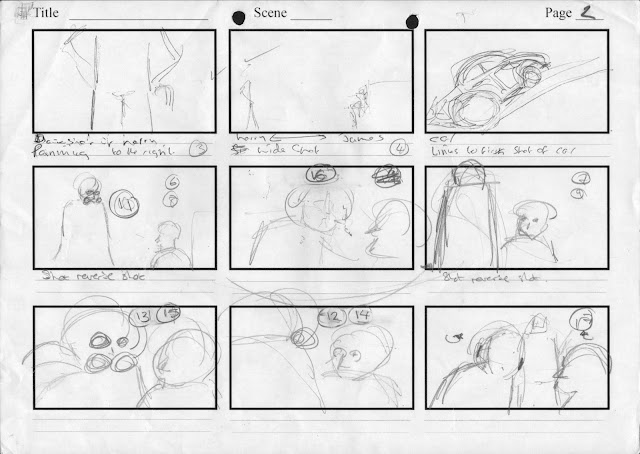


The storyboard is illustrating the main protagonist who is being held hostage by a gang from a syndicate that are asking for a key to extract information from a secret location. Despite the protagonist's refusal of giving in, the leader eventually arrives to the scene and increases the tension in the atmosphere by threatening more with violence. The protagonist eventually escapes from the scene in a car and a car chase begins. The protagonist escapes from near death after loosing the syndicate between a train track crossing which leads to the protagonist being able to live another day and keep the key he still holds.
The first draft has given us a foundation solution to our storyboard and we are planning to next make a animatic which will give us an insight to how our film will be presented. Shortly after making our first draft, we will make another more refined draft of our storyboard with added details such as camera angles, location shots, time lengths etc.
Monday, 26 September 2016
Student Pitches
In addition to the pitch which Alex and I delivered to our secondary audience, we also got the opportunity to watch some of the pitches from the other members of the audience. The pitches varied in context, some were planning to do music videos and others were planning to do a short film. The ideas which were delivered were varied hugely and all sounded very interesting.
A slideshow below shows some of the images of the pitches from the other groups.
Subscribe to:
Posts (Atom)